







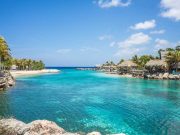

Lately everyone seems to be chasing the same thing: a corner of Italy that still feels private and unfiltered. On a quiet stretch of Sicily’s Alcamo coastline I found just that—a converted tuna factory and family villa that rises from the seafront like a small fortress, its central tower looking out over the bay. Built in 1913 from warm golden stone, the building’s bright blue shutters and terra-cotta roof give it an unexpectedly playful air, like a vintage postcard come to life.
This coastline has been tied to tuna fishing for centuries, and the villa—once the headquarters of a prominent local family’s fisheries—kept watch over the boats and the surrounding waters. Six generations later, the family still owns the property. Rather than let it fall into ruin, they restored it with care, turning it into a guesthouse that doubles as an intimate events venue while honoring the building’s original character.
Getting there requires a car: I flew into Palermo and drove about 35 minutes to a small beachside lot. There are no neighboring houses and little else around; when you walk up to the palazzina, the soundtrack is simply the sea. A lush, winding garden leads to the entrance, and there’s no formal reception desk—this is not a hotel. The owners, a husband-and-wife team, make that clear from the start: don’t expect daily housekeeping, buffet breakfasts, or a staffed lobby. What you do get is an honest, lived-in place full of historic details, handmade touches, and personal warmth.
The building is divided into four bookable apartments that can be rented separately or together. Common rooms—a dining area, lounge, and a well-loved kitchen—are shared, and guests are encouraged to treat the house like a private residence. I began my stay in the largest option: a lofty ground-floor apartment with soaring ceilings and flagstone floors. The common floor above is the heart of the place, with a small kitchen in a cheerful pink hue, vintage dressers stacked with crockery, and counters topped with bowls of fruit and crates of fresh produce. The living room opens through French doors straight onto the sand, and the decor mixes faded velvet sofas, collected nautical trinkets, and stacks of seashells in a way that feels romantic and slightly whimsical.
For my first nights I slept in the tower itself. Climbing up was an adventure—suitcases and bags tucked into narrow flights of stairs—but the payoff is real. The wind plays through the old panes and frames, the sea is audible throughout the day, and the top floor has a vaulted ceiling punctuated by a red glass pendant that casts a warm glow. Decorative blue strokes highlight doorways and alcoves, and an Art Deco headboard contrasts with the century-old architecture. The tower has a tiny kitchenette and a sitting nook perfect for morning coffee, though the kitchen facilities are basic: a tap that didn’t work properly, a few rusty utensils, and an intentionally modest setup that felt more decorative than functional. The bathroom for the tower is down a flight of stairs on the floor below; it’s the least updated room in the house and can feel a bit detached from the sleeping quarters, which is something to bear in mind if you need late-night access.
After a couple of nights I moved to a first-floor mini-apartment and found it better suited to a longer stay. Two large bedrooms open into one another, and high windows flood the rooms with light. Checkerboard floors, mint-green bedside tables, and framed vintage posters give the space a lived-in, nostalgic charm. The bathroom here is lovely—deep red marble tile, a large tub, and a view over the beach—yet the room sits gardenside and is quieter than the tower, which made for very peaceful evenings.
Because the property operates more like a private home than a hotel, you’ll need to plan meals and outings yourself. Castellammare del Golfo is under ten minutes away by car and makes for an easy trip: the marina front has cafes and seafood restaurants where you can linger over an Aperol Spritz, and Corso Giuseppe Garibaldi is lined with bakeries, boutiques, and casual spots ideal for an arancini and a stroll at dusk. A must-see is Tonnara di Scopello—a restored tuna factory and protected cove where you can buy a ticket to sit on deck chairs, swim in clear water, and grab simple beachside food. It’s heavenly but gets busy in high season, so reserve ahead when possible.
For a different kind of day trip, drive up to Erice, the medieval hill town clinging to the heights with narrow cobblestone streets and a cliffside fortress. The views are spectacular and blustery—bring a jacket—and a few hours are enough to explore churches, sample pastries, and take in the panorama. Palermo’s lively center is also only about half an hour away if you crave museums, markets, and city life.
The charm of staying here is the sense that the place exists on its own terms: a historic family home with beautifully restored rooms, eccentric details, and real proximity to the sea. It isn’t slick or hypermodern, and that’s the point. Some practical notes: bring your own breakfast supplies if you prefer a hot meal, don’t expect daily room service, and book popular nearby sites in advance during summer. For me, one of the simplest and most memorable evenings was grabbing pizza from a family pizzeria, sitting on the sand, and watching the sky turn lavender as boats rocked in the harbor. If you want an authentic Sicilian stay anchored in history and sea air, this watchtower is hard to beat.