







Beaches Resorts recently received recognition in Condé Nast Traveler’s Bright Ideas in Travel, but for our family the more meaningful detail was that every Beaches property is an Advanced Certified Autism Center. That designation promised programs and training intended to make a resort stay more accessible and comfortable for autistic guests and their families — and I wanted to find out how that looked in practice.
As the parent of two teenagers, I look for vacations that feel easy. My younger daughter is 15 and autistic; she’s joyful and loving but can struggle with long travel days, changes to routine, crowded spaces, and unexpected sensory input. For her, consistency and gentle structure aren’t luxuries — they’re necessary. When travel is rare, I want each trip to be enjoyable for everyone, and that means the destination must be ready to meet our needs.
Before we left for Beaches Turks & Caicos, the resort offered a pre-visit questionnaire that asked useful, concrete questions: how does our daughter communicate, what activities does she like, what triggers upset, and how comfortable is she in water (they even use a level scale from land-based to very confident swimmer). This information allowed staff to suggest accommodations and plan ahead. They reserved an oceanview suite for us in the new Treasure Beach Village — a quieter area of the property — and arranged private airport transfers so we could avoid busy buses and long waits. They also explained the inclusive day camps and the 1:1 Beaches Buddy service.
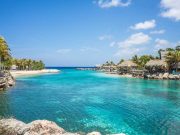
We arrived on a bright, breezy April afternoon and immediately felt welcomed. The open-air lobby in Treasure Beach Village has a playful ceiling of sculpted sea turtles that delighted my daughter, and the lagoon-style pool and broad view of the ocean erased much of the travel fatigue. A kind staff member named Jevon showed us around and pointed out a small, out-of-the-way stretch of sand at the far end of the beach that he liked for its views and calm. It became our favorite low-key spot, where the family could be together with very little stimulation.
Dining at Pinta, the village food hall, set the tone for how staff approached sensory and dietary needs. Our server asked about dietary restrictions and food sensory issues; a culinary concierge is also available to recommend options or prepare special dishes if needed. That attentiveness continued throughout our stay. When the snorkeling trip we had planned was canceled because of wind, our Beaches Buddy adapted: instead of the boat, they met us at the pool, swam with our daughter for hours, and later supported her during a requested mani-pedi while I had a massage.
I met Fedeline Julien, who manages children’s programs at the resort. She talked about ongoing autism sensitivity and competency training for staff, but emphasized another point I noticed firsthand: staff often learn the most through direct interaction with guests and by adapting in real time. The resort’s goal, she said, is to make the experience better for everyone, not only for some families.
Simple, thoughtful measures make a big difference. Beaches publishes a detailed sensory guide that rates every area of the resort by touch, taste, sight, smell, and sound intensity and marks low-sensory zones for guests who want quieter spaces. Those are not expensive or flashy touches, but they show intention: considering how people experience the resort and offering alternatives that reduce stress. For a lot of families, those incremental adjustments are the difference between a canceled trip and a cherished memory.
An example of staff attentiveness came during a dinner at the teppanyaki restaurant. The show is loud and boisterous by design; the host asked whether noise-reducing headphones would help and pointed out a quiet garden nearby if anyone needed a break. We had already prepared our daughter for the noise, and she loved the performance and her teriyaki chicken. Still, the simple offer of an alternative space and accommodations made me feel seen and relaxed.
On most days we moved slowly: in-room breakfasts, froyo at the Italian Village, lunch by the shore, afternoons at the pool and beach, and a visit to the island’s only movie theater on the property. We didn’t try to fill every hour; the point was to enjoy the place without pressure. The Beaches Buddy service and staff training meant we didn’t have to plan every contingency; someone had already smoothed several potential rough spots.
Beyond practical help, there’s an emotional effect to feeling welcomed rather than merely tolerated. I don’t apologize for my family’s needs, and I want my daughter to be included — to get a manicure, eat at a fun restaurant, swim, and be part of adventures. But inclusion is more than a right; it’s the sense that people around you recognize and accept your family. When staff proactively ask questions, offer quiet spaces, and adjust plans, I can relax and be present in a way I rarely can on trips where every surprise is a potential stressor.
When I plan trips that could be challenging, I tell myself to look for ways to make things ‘ten percent easier.’ Small adjustments add up. At Beaches, many of those ten-percent solutions had been anticipated: signage, low-sensory areas, pre-visit planning, trained staff, and flexible services like private transfers and the Beaches Buddy program.
Back home, what I miss most is that little beach Jevon showed us — our calm corner on Grace Bay where we watched the sunset together. The trip felt like a rare, easy stretch of time when each of us could enjoy the place on our own terms. I hope more hotels and resorts follow a similar path: creating intentional, tangible supports so families with autistic members can travel more often, more confidently, and with the same freedom to relax and be present that every traveler deserves.