




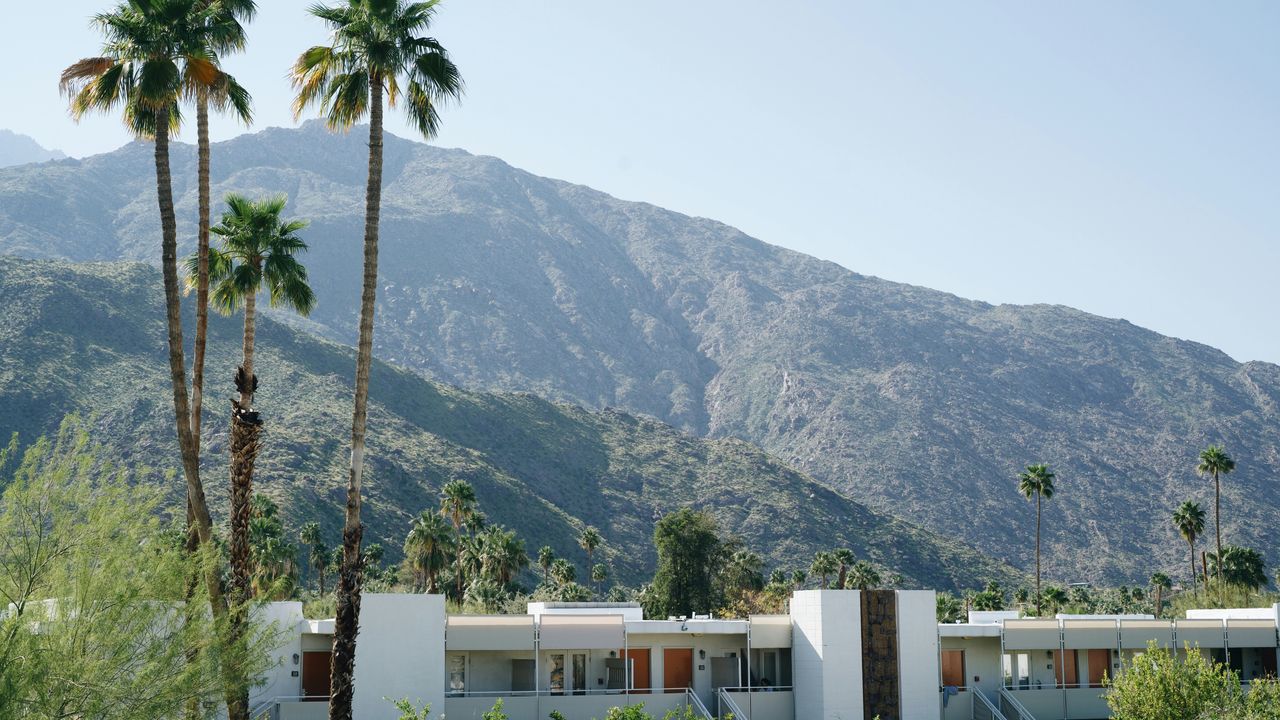
The pool hoist eased me into warm water as bubbles rose from deep underground. These mineral springs, protected by the Agua Caliente Band of Cahuilla Indians for generations and long believed to have healing and spiritual power, received my body without question. Floating weightless while the San Jacinto Mountains flushed pink at dusk, I felt both ancient welcome and a new kind of ease.
I had come hoping for rest—something disabled travelers often find hard to secure. Spas can be physically inaccessible, retreats closed off by design, and many practitioners unprepared to treat disabled bodies as worthy of care. Palm Springs, about 130 miles east of Los Angeles, has long been a refuge: a hideaway for Hollywood in the 1930s, an early safe place for LGBTQ+ people, and now a city where more than a third of residents identify as queer. The question was whether that culture of welcome included people with disabilities.
“For families like mine, travel has always meant planning around what might go wrong,” says Josh Heinz, a local father and community engagement manager for Visit Greater Palm Springs. He helped lead a recent effort to make Greater Palm Springs the first destination in Southern California to earn Certified Autism Destination status, joining only a handful of regions worldwide. Hotels, restaurants, and attractions across the valley completed specialized training to better serve guests with sensory sensitivities—learning, for example, that a meltdown is not a tantrum, that fluorescent lighting can be overwhelming, and that sometimes a quiet space matters more than a scenic view.
Heinz notes that diagnoses and awareness are growing: many families now report avoiding travel because they can’t find dependable, safe options. The region’s training aims to change that, preparing staff to make neurodivergent and disabled visitors feel genuinely welcome.
One of the earliest properties to embrace the work was the JW Marriott Desert Springs Resort & Spa. In the hotel spa I watched it in action. I transferred to the table in my own ungainly way—the kind of movement that often draws awkward hands or anxious looks—yet here nobody flinched. The therapist moved warm stones along my scarred spine with steady confidence, adjusting pressure and technique as needed so I never felt singled out. At The Spa at Séc-he, situated above sacred mineral springs, I wrapped myself in a robe comfortable enough to be a duvet and watched the mountains deepen to violet as people of many shapes and ages relaxed nearby. My wheelchair barely registered, pool hoists were plentiful, and with both physical and attitudinal barriers eased, a restorative quiet settled in. I hardly wanted to move for days.
On my last morning, advised that no Palm Springs trip is complete without a drag brunch, I went to the Saguaro Hotel, whose rainbow facade is one of the valley’s most photographed sights. “A drag brunch is a rite of passage, honey,” said Kiki Masters, sparkling in red sequins. My avocado toast arrived as a performer executed a split a few feet from my table and the room erupted. What stayed with me more than the spectacle was a family across the room: grown sons, a poised mother, a father in polos, and a girlfriend who might have stepped out of a pageant. “I want my boys to see all kinds of people,” the mother said. The show was intentionally family-friendly—meant to entertain and to normalize difference.
The brunch host put it plainly: to be able to move through a place and see yourself reflected there, without having to explain or apologize, is a form of healing that no treatment menu can replicate. “The LGBTQ community, the neurodivergent traveler, the wheelchair user—we aren’t exceptions to be managed; we are central to the experience,” they told me.
Before I left I visited the Agua Caliente Cultural Museum. The Cahuilla do not say goodbye; they say Áčaqun ehíčine—“go in a good way.” The blessing felt like the right way to leave a city that is trying to make refuge and wellness truly inclusive: a place where hot springs, trained staff, accessible hotels and attractions, and a culture of welcome come together so more people can travel without planning only for what might go wrong. Go in a good way. After three days in Palm Springs, I could.
Where to stay
– Hampton Inn & Suites Palm Desert: uncomplicated comfort near downtown restaurants and galleries.
– JW Marriott Desert Springs Resort & Spa: sprawling property with multiple pools, lazy rivers, and golf.
– Renaissance Esmeralda Resort & Spa, Indian Wells: a quieter, more intimate option with tennis and proximity to the Indian Wells Tennis Garden.
– The Ritz-Carlton, Rancho Mirage: peaceful hillside location with sweeping views of the San Jacinto range.
All four offer ADA-compliant rooms and facilities and are Certified Autism Centers.
Where to eat and drink
– Farm: farm-to-table California cuisine sourced from local growers.
– The Front Porch: neighborhood favorite serving approachable comfort dishes.
– Tac/Quila: excellent Mexican plates, cocktails, and ceviches that highlight surprising desert seafood options.
All three restaurants are wheelchair accessible and have accessible parking and restrooms.
What to do
– The Living Desert Zoo and Gardens: 50 acres showcasing regional flora and fauna.
– Rancho Mirage Library & Observatory: striking architecture, cultural programs, and evening sky events.
– Children’s Discovery Museum of the Desert: hands-on, rotating exhibits for all ages.
– Palm Springs Aerial Tramway: dramatic rides offering valley and mountain panoramas.
– Riverside County Fair & National Date Festival: a lively, multiweek celebration of agriculture, music, and community.
Most listed attractions are wheelchair accessible and ADA compliant; the Tramway, Living Desert, Library & Observatory, and Children’s Discovery Museum are Certified Autism Centers.
In Palm Springs I found wellness that truly included me—where mineral springs, trained staff, accessible lodging and attractions, and an ethos of welcome combined into a rare rest. Áčaqun ehíčine—go in a good way.