Airlines are pushing power banks out of the overhead bin
A growing group of carriers now require portable chargers to stay within reach at the seat, and some are capping how many each passenger can carry.
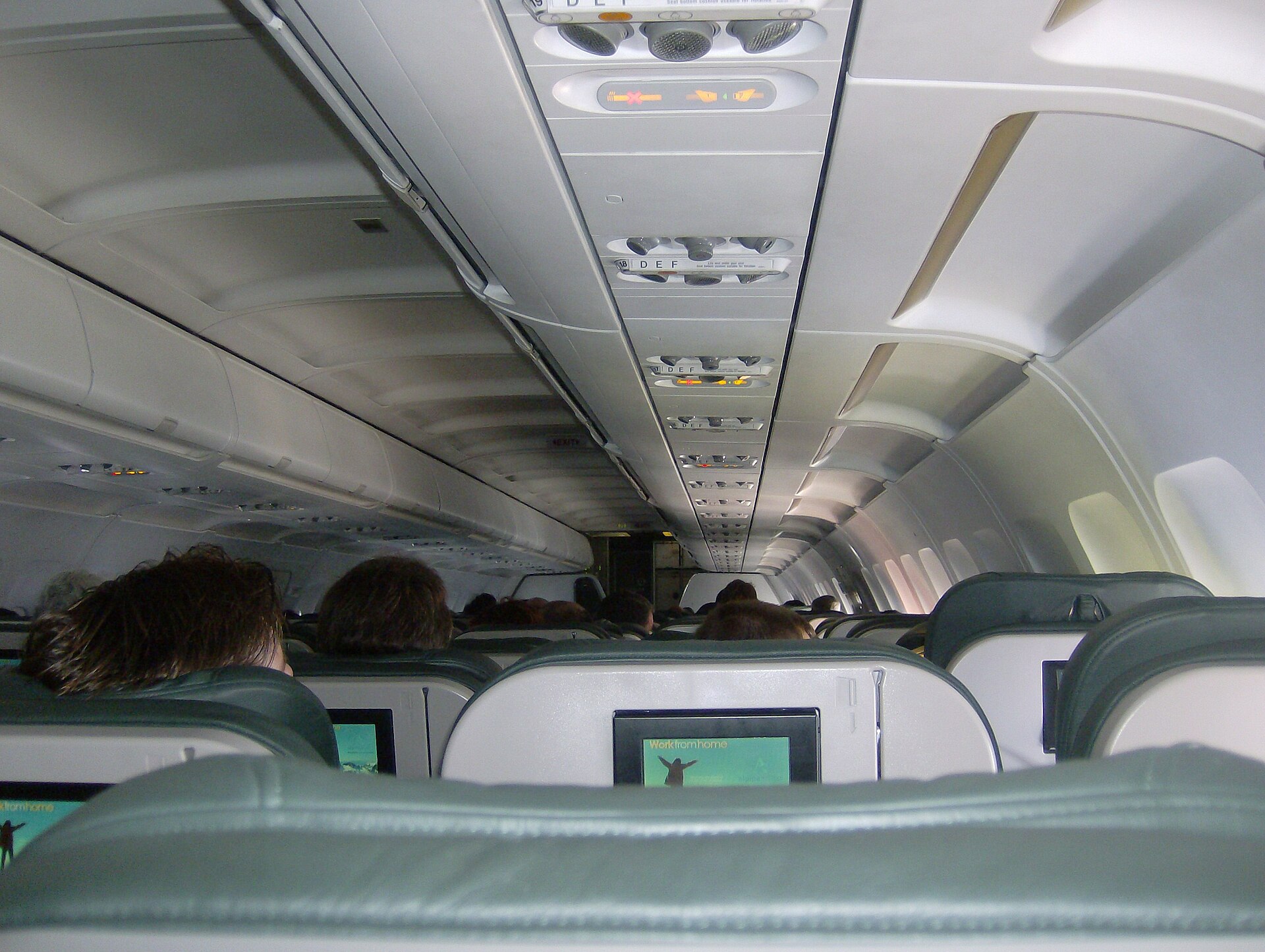
A significant group of airlines has tightened its rules on portable batteries this year, and the change goes beyond the long-standing ban on checked carriage.
The new requirement is about where in the cabin the battery sits. Several major carriers now prohibit power banks from overhead bins entirely, requiring them to be kept at the seat, within the passenger's reach.
Why the bin is the problem
The reasoning follows directly from why these devices are allowed in the cabin at all. The cabin is safer than the hold because a failing battery is noticed and dealt with immediately.
A power bank inside a closed bag inside a closed overhead bin is, for practical purposes, in a small cargo hold above your head.
Smoke from a bin takes longer to detect, the bin has to be opened before anything can be done, and the crew is dealing with a hot bag rather than a visible device. Keeping the battery at the seat removes every one of those delays.
The other restrictions arriving alongside it
Quantity caps
Some carriers have capped the number of power banks a passenger may carry, in a few cases to as little as one. This is a meaningful change for photographers, content creators and anyone travelling with drone equipment.
A ban on in-flight recharging
Under industry dangerous goods guidance, recharging a power bank from an aircraft seat outlet is prohibited. This applies to both the 110V outlets and the USB ports.
The concern is the charging process itself. Charging is when a lithium cell is under the most stress, and the power delivery available at a seat is not designed or regulated for it. Using a power bank to charge your phone is fine; charging the power bank is not.
Watt-hours, briefly
The measure that governs what you may carry is watt-hours, not milliamp-hours.
- Under 100Wh — permitted without airline approval. Most consumer power banks between 5,000mAh and 26,800mAh fall here.
- 100 to 160Wh — permitted with airline approval, usually limited to two units.
- Over 160Wh — not permitted in passenger baggage.
Most reputable power banks print the watt-hour figure on the casing. If yours does not, divide the milliamp-hour rating by 1,000 and multiply by the voltage — typically 3.7 for a single-cell pack.
What this means in practice
The rules are converging but not identical, and the differences between carriers are exactly the sort that produce an argument at the gate. Two habits cover almost every case:
- Keep every battery in the bag that stays at your feet, never in the one that goes overhead.
- Check your specific airline's page if you are carrying more than one or two units.