







In 2018, as I curled my mother’s hair and we watched a documentary about Black colleges, she dropped a detail I had never heard: the summer after her freshman year at Southern University, she had spent two months in Switzerland. My hand froze on the curling iron. How had she, a young Black woman from a segregated town in southwestern Louisiana, the daughter of parents who never finished high school, managed to travel to Europe in the 1960s?
She told me the trip had been arranged through The Experiment in International Living. With encouragement from a professor, fundraisers run through the university paper and a car wash she and classmates organized, she scraped together the roughly $1,500 she needed. “We traveled around Switzerland for two months and the trip changed the course of my life,” she said, the memory warm in her voice. She hadn’t been back since. I promised then we would go together.
Nearly seven years later, in September 2025, we made good on that promise. With one week and two Swiss Travel Passes, we planned a rail journey east from Geneva to Zurich, stopping where she had lived or visited—St. Gallen, Lucerne, Zurich—and adding Geneva and Interlaken. Time felt urgent. My father had died in the interim after years with dementia, and I wanted to preserve my mother’s stories while she could still tell them.
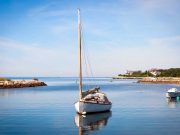
We arrived in Geneva on a bright afternoon, the lake glinting with sailboats. In the taxi my mother told our driver, Alberto, about our trip; he told us he’d grown up near Lugano. Then she said something I had never known: before leaving for Switzerland at 19 she had planned to marry her boyfriend, expecting an engagement when she came back. Walking along Lake Lugano, face to face with the Alps, she realized her life could be different. “The world is mine to explore and I don’t want to get married,” she told me. That decision rerouted her life and, in a way, made mine possible.
Geneva, not part of her original summer, felt like an invitation to reclaim the feeling of being citizens of the world. We toured the Palais des Nations and sat in the Human Rights Council meeting room, ate at Restaurant Les Armures, and celebrated her birthday with a mother-daughter massage at our hotel spa, where pastries spelled joyeux anniversaire in chocolate. Seeing the 19-year-old she once was collide with the delighted 76-year-old before me felt like a small miracle.
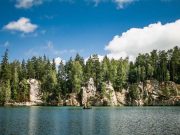
As we rode the train east, the scenery changed from city streets to rolling green hills, pastures dotted with cows, waterfalls and alpine lakes. Months before the trip my mother had dropped a battered photo album on my kitchen table: small, faded snapshots of her host family, an open-air bus ride through Basel, murals and the cathedral in St. Gallen, a cheese factory, sledding in St. Moritz, and students tossing luggage out of train windows to make sure they didn’t miss their stop. Her journal from that summer had been lost in a house fire years earlier; the album was all she carried. Watching the passing landscapes felt like moving through those images in motion. My mother filled a new journal page after page on the train, determined not to let these memories disappear again.
In Interlaken she gasped at flower beds and the clarity of the lakes with a childlike wonder. In Lucerne we wandered into the Grand Casino on a whim, and she taught me the rules of roulette with a laugh. In Zurich we indulged in Lindt chocolate and watched hardy locals swim in cold water from our balcony at La Réserve Eden au Lac. When she lingered on the decades she hadn’t returned, I kept steering her back to the present: we were here, and that mattered.
Her memories became most vivid in St. Gallen, where she had lived with a host family. “Ohhh I remember this!” she squealed as the train eased into the station. Church bells chimed as we walked toward Hotel Einstein to meet our guide, Antoinette. She remembered attending mass at the cathedral with her host family and immediately bonded with Antoinette. We visited the Abbey of St. Gallen’s library and monastery archives — a book lover’s paradise, with manuscripts stretching back to the early Middle Ages — and paused in the cathedral to pray. I found myself on my knees, weeping for my father’s absence and grateful for the chance to take this trip with my mother. Later, walking through Gallusplatz as the sun dipped low, my mother stopped, spun and sang the opening verse of “The Way We Were.” I put my phone away and watched her be wholly herself.
Seeing her move between excitement and quiet regret made clear how much she carried for our family. My parents taught me to be a traveler in more ways than one. My father, born and raised in Montgomery, Alabama, had once driven people during the Montgomery Bus Boycott, worked alongside Dr. Martin Luther King Jr. and Reverend Ralph Abernathy, then traveled the world as a parachutist and later as a political strategist. Their lives together modeled courage, curiosity and purpose.
For my mother, going to Switzerland at 19 had been an act of bravery: leaving a segregated town for a place she had only imagined, stepping into the unknown and discovering a different version of herself. Returning together decades later was not simple nostalgia. It was an opportunity to reclaim and share that younger self — the choices that shaped her, the curiosity she passed to me, and the family history that might otherwise have faded. Her greatest joy, she said over and over, was sharing this part of her life with me: letting me see, through the lens of her 19-year-old eyes, the summer that changed everything.