





Why Louisiana
Beachler says Louisiana was the obvious choice. Its proximity to the Mississippi Delta, shared history and similar topography make it a close stand‑in: in northern Louisiana there were sharecroppers and cotton fields just as in Mississippi. Beyond geography, Louisiana offered practical advantages, including a robust production infrastructure and a deep pool of local film talent—factors Beachler used when pitching the locations to Coogler.
Research in Mississippi
To ground the film in authenticity, Beachler and Coogler did hands‑on research in Mississippi. They visited Clarksdale and drove the southern to northern Delta, stopping in towns such as Cleveland and Mound Bayou, the latter notable as one of the earliest Black settlements founded by freed people. They supplemented fieldwork with archival research at the Library of Congress, and Coogler and composer Ludwig Göransson spoke with veteran blues musicians and local residents to capture oral histories and the lived experience of the era. Those conversations and images helped shape the film’s social and economic context: the contrast between the land wealth produced by cotton and the daily realities of sharecroppers during the Depression.
Plantations and painful histories
Some sequences, including the cotton field scenes, were shot at Laurel Valley Plantation in Lafourche Parish. Beachler chose locations with honest historical backdrops, and she was deliberate about not romanticizing plantation sites. Laurel Valley, a large sugar cane plantation dating to the late 1700s that relied on slavery for over a century, carries a brutal legacy. Beachler and the production used the space to confront that history rather than gloss over it, building a church and shooting in neighborhood areas that reflect the harsh realities of the time. She points out that some historic sites, like Oak Alley, now make an effort to present a fuller, more realistic account of slavery and life in the region.
Juke joints and cultural reference points
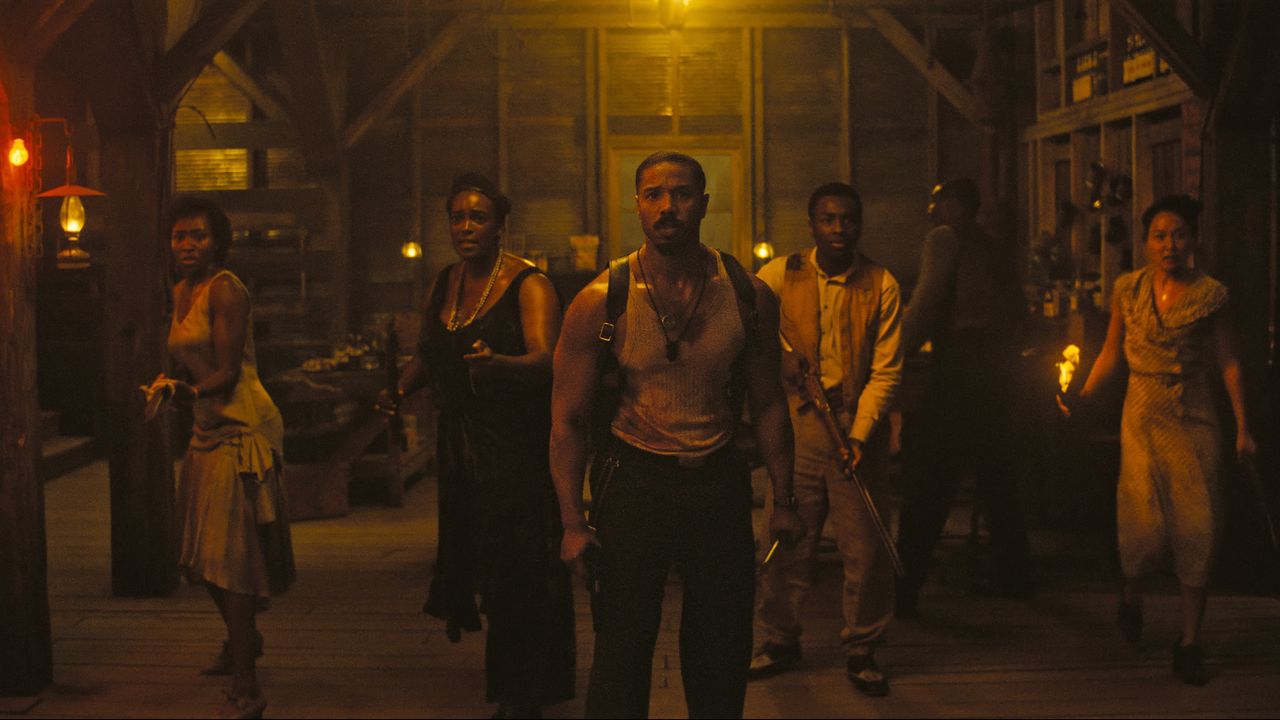
The juke joint is central to Sinners, both as a setting and as a cultural touchstone for blues music and community life. Beachler and the team searched for surviving juke joints in Mississippi to study their character. Po’ Monkey’s Juke Joint in Clarksdale emerged as a key reference: an unassuming, hard‑to‑find shack near the Crossroads at Highways 61 and 49, a place steeped in blues lore and the legend of Robert Johnson. After COVID, Po’ Monkey’s became more of a memorial, but its improvised, highly decorated, word‑of‑mouth nature was precisely the kind of vernacular space Beachler wanted to echo on screen.
Topography and atmosphere
Louisiana’s bayous, humidity, and vegetation helped create the film’s eerie atmosphere. Beachler needed secluded sites with bodies of water near where a sawmill would plausibly operate, since mills historically relied on waterways to float logs. The production scouted across southern Louisiana, including St. Bernard and Plaquemines parishes, and found an abandoned golf course that had been untouched since Hurricane Katrina. The crew cleared the overgrowth and staged the juke joint and surrounding environments among the swamp wildlife, lakes and wetland vegetation.
For the wide cotton‑field vistas, Beachler sought big open panoramas where the eye can travel for miles, a visual language she compares to classic Westerns and filmmakers who emphasize expansive sky and minimal horizon detail. The goal was to build a Clarksdale that feels real yet slightly removed, a world based on historical reality but filtered through a heightened, almost mythic lens.
A local perspective and city life
Beachler’s deep New Orleans ties informed both the production and the personal side of the shoot. She describes Magazine Street and the Irish Channel as local hubs, naming Coquette as a longtime favorite restaurant and Lebanon’s Cafe near Carrollton as another go‑to. City Park, the sculpture garden, and the New Orleans Museum of Art are places she and colleagues enjoyed during downtime. She also notes the city’s lively festivals, food scene and film tourism—fans visit sites tied to films and shows such as The Curious Case of Benjamin Button and American Horror Story, as well as locations used for Sinners, including spots in Donaldsonville.
Creating a believable Delta through Louisiana
Ultimately, Beachler used Louisiana’s physical and cultural landscape to recreate the Mississippi Delta of 1932. Through careful research, respectful treatment of painful histories, and selective use of locations that provided both infrastructure and authentic atmosphere, the production built a world that feels true to the era and to the people who lived it. The result is a film that channels Delta culture and blues tradition while using Louisiana’s terrain and communities to bring that vision to life on screen.”}