








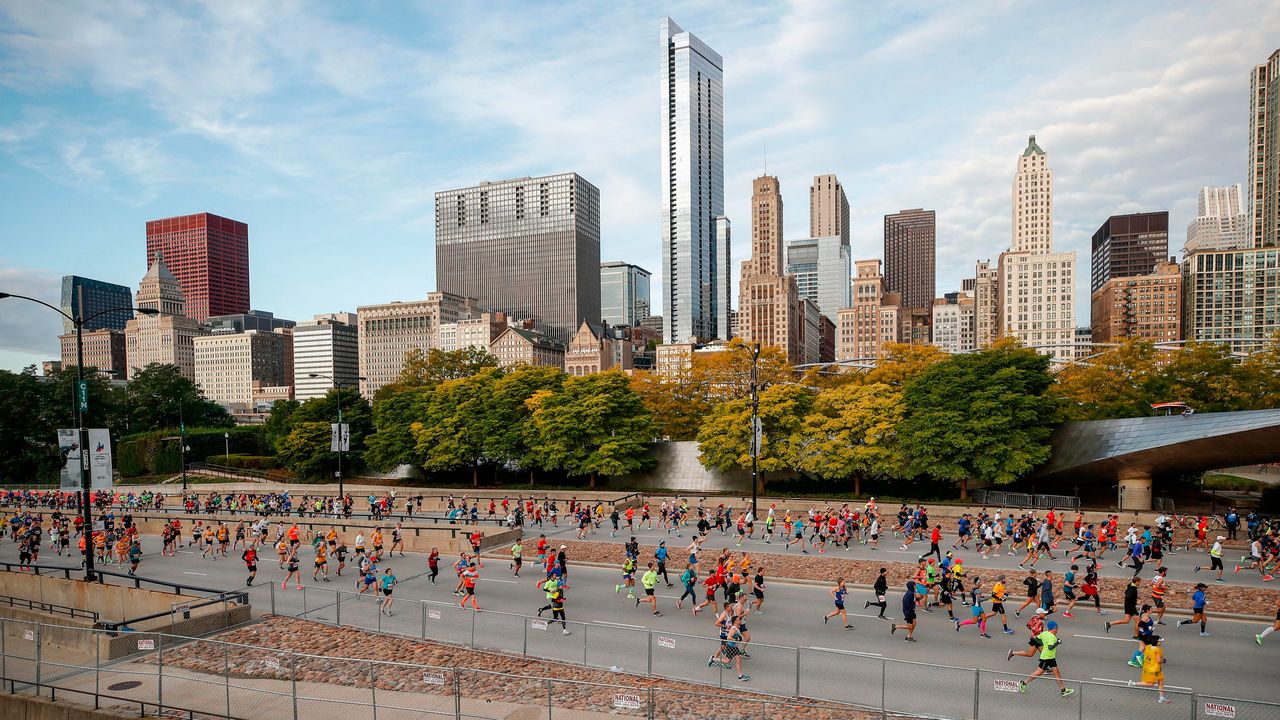
After 13 half marathons and a goal to run 13.1 miles in every state, my usual recovery was simple: stretch on the hotel floor, use my massage gun, take a shower, and get back to sightseeing. That routine served me fine, but when Park Hyatt Chicago invited me to try a full suite of wellbeing services for amateur athletes, I decided to see what an elevated recovery day felt like.
I stayed in the Wellbeing Suite the night before and after the Bank of America Chicago 13.1. The suite felt more like an upscale apartment than a hotel room: a roomy living area with lake views, a Tonal strength unit in the corner, a minimalist bedroom with a Bryte Balance bed designed to relieve pressure points, and a large bathroom with a walk-in rain shower and a freestanding tub. Small touches—juice shots, fresh fruit, and nuts on arrival—were a welcome upgrade from the handful of snacks I usually bring to races.
The Bryte bed helped me sleep well the night before, and having a yoga mat and bench in the room made it easy to stretch and warm up without making a gym stop. The next morning I began my recovery with an in-room IV treatment delivered by a registered nurse. The drip contained B12 and vitamin C, magnesium, lipostat, and glutathione—nutrients aimed at supporting immune function, reducing inflammation, and assisting muscle recovery. The IV was quick and mostly painless; you notice a cool sensation as the fluids go in and sometimes a mineral taste in your mouth. My nurse said effects usually show within a couple hours and can last 24–36 hours. For me, the difference was noticeable when I started moving: I felt less stiff than I usually do the day after a race.
From there I went to the hotel spa for an 80-minute “Grounded” massage that used heated basalt stones. The treatment balanced deeper work on my legs, lower back, neck, and shoulders with restorative touches like a head massage and a heated table. After the massage I relaxed poolside with carrot juice, and the spa team offered the option to use the sauna or return to the room to continue resting.
Back in the suite an ice bath awaited. If you haven’t tried a cold plunge, it’s a bracing, short experience—the session I did included brief submersions totaling under a minute or two. I started with a quick leg-only dip, then submerged my torso and chest for a slightly longer interval. The cold plunge delivered an immediate adrenaline lift and a clarity that a cold shower doesn’t quite match. Anecdotally and in some studies, cold immersion can reduce muscle soreness and speed perceived recovery, so it felt like a natural complement to the massage and IV.
Which of the three services helped most is hard to isolate, but together they made a measurable difference. I was moving comfortably the rest of that day and the next, when I would normally still be hobbling. On the flight home my hips were a little uncomfortable—probably just travel ergonomics—but my back, shoulders, and legs felt much less battered than after past races. The following day stairs were no problem, which for me is a reliable sign of better-than-usual recovery.
I plan to fold cold therapy and regular massages into my post-race routine when possible, especially when I have travel days after a race. My massage gun and hydration essentials will remain staples, but I now see the value in adding more structured therapies when available.
A few practical notes: these recovery services at Park Hyatt are available to any guest, whether in a suite or a standard room. Suites give more space for in-room treatments and privacy; both room types have tubs that can accommodate cold plunges. At the hotel spa the 80-minute massage was priced at the spa (with a higher fee for in-room treatments). Drip IV options were offered as well, with introductory pricing for several formulas intended for dehydration, energy, headache relief, and recovery.
Since that Chicago race I’ve tried other recovery experiences I recommend:
– Othership: A social wellness club focused on hot/cold rotation with saunas and multiple cold plunge tubs. I’ve gone the day after half marathons and always leave with lighter-feeling legs.
– Remedy Place: A choose-your-own-wellness space offering cryotherapy, IV drips, hyperbaric chambers, lymphatic compression, and the Remedy Roller (an infrared-assisted percussion device that helps move lactic acid and ease muscle tightness).
– Compression boots (Hyperice Normatecs): A serious investment but extremely effective for post-run recovery. They’re bulky for travel but excellent for home or road trips by car.
Ultimately, recovery is personal. For seasoned runners a 13.1-mile outing might be a long training run; for me it remains an achievement worth treating. Combining targeted therapies—nutrition, manual therapy, heat and cold, and compression—helped me bounce back faster than my usual protocol.
This article describes personal experience and general information about recovery services and should not be taken as medical advice. Consult a healthcare professional before trying new treatments, especially IV therapy, cold immersion, or any interventions if you have underlying health conditions.