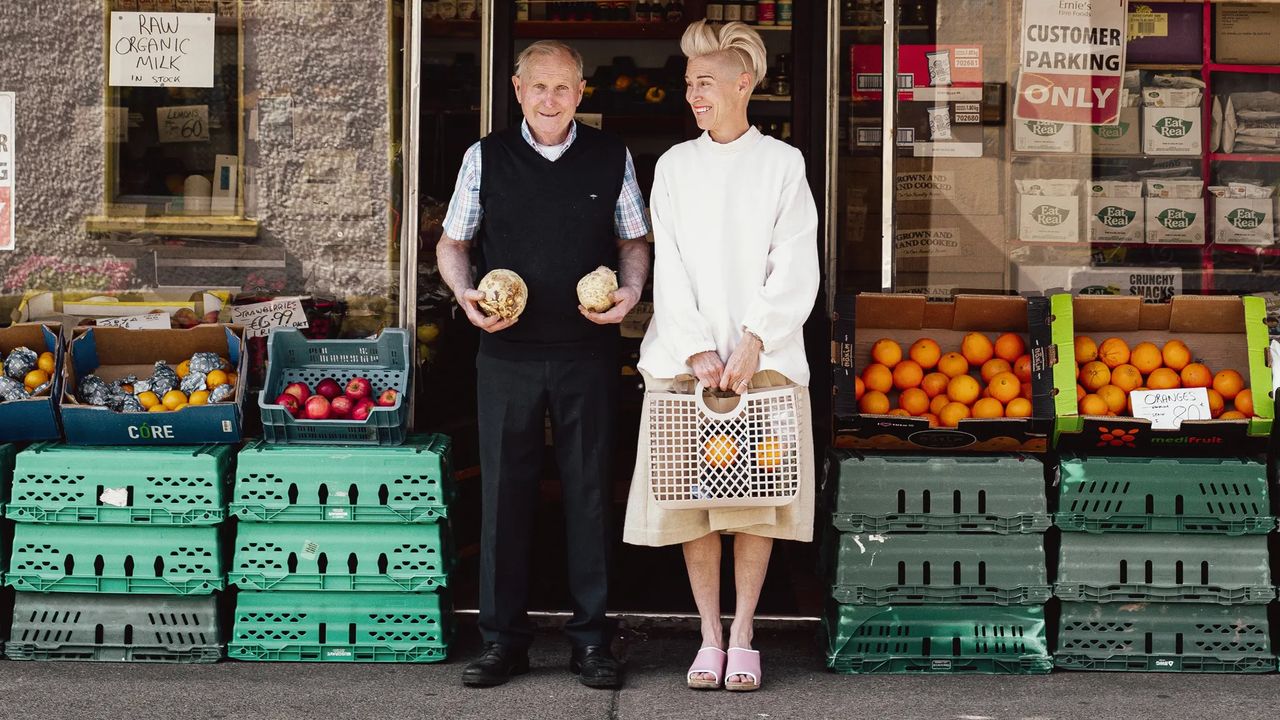

“You get this feeling when you enter the Burren’s limestone landscape,” says Aoibheann MacNamara of the moonlike karst in County Clare. “It has an energy, and a history that permeates.” MacNamara champions slow food at her Galway restaurant Ard Bia and slow fashion with her homespun label The Tweed Project. I followed those stark, serene karst fields to her latest project, Summerage, a reimagined farmhouse on 32 acres. With Scandi-minimal interiors and no Wi‑Fi, Summerage encourages reading, blackberry picking, or watching the shaggy-maned ponies Crunchy and Holly out the window.
Across western Ireland, openings from Clare to Mayo are quietly redefining “slow travel”: village pubs turned design retreats, pop-up feasts on organic farms, and projects that revive traditions. I zigzagged the Atlantic coast to meet people reshaping the region’s pace and restoring old ways.
In leafy Bullaun, County Galway, chef Danny Africano is working toward self-sufficiency at Lignum. The restaurant’s kitchen garden yields an abundance that he preserves for winter: dimly lit rooms hold neatly labeled jars of pickles and preserves, while the open kitchen sends out artfully plated, smoke-kissed dishes—local mussels in their shells, foam-topped pork, and dry-aged duck from sustainably minded sources.
Further west in Connemara, once a pub and B&B in Roundstone has become Within the Village, four pared-back town houses and a cottage that showcase regional art and design. Launched in 2023 by friends Maria Murphy, Lorna Mayne, and Keith Kissane, the project follows an albergo diffuso ethos: staying here plugs you into the community. You can listen to Gaelic Games and rugby banter at King’s, sip a creamy pint of Guinness by the harbor at O’Dowd’s where slate serves as makeshift tables, and wander to Roundstone Ceramics to find potter Séamus Laffan at his wheel. Each morning, warm scones might appear on the door; walls display glow-in-the-dark art by Dorothy Cross and nests by traditional weaver Joe Hogan sit like small sculptures.
At Fernwood, a nearly off-grid organic farm a half-hour northwest, the emphasis is landward. Fernwood is meant for lingering in cozy, sun-dappled spaces warmed by wood stoves before walking through bogs and rewilded pastures. The Stilt House—one of the newer additions—has concrete steps imprinted with fallen leaves by artist Paddy O’Malley. Co-owner Anne Ashe described builders from County Sligo who lived on-site in a camper van and carried every pane of glass and timber by hand, feeding into Fernwood’s energy. A woodland sauna overlooks Salt Lake, offering slow, contemplative time in nature.
Clare Island carries its own slow rituals. A restored, sunken larch-and-oak ferry, The Dolphin, now shelters bourbon barrels from Kentucky used for aging whiskey. Clare Island Whiskey founder Carl O’Grady says the tasting demands commitment: collectors must visit the island, explore historic sites like Grace O’Malley’s 16th-century castle, and connect with the community that the whiskey supports.
On the mainland, Westport Estate is weaving myth and ecology into a large-scale plan. A nursery of native seeds will feed Wild Realms gardens—an effort to reconnect visitors with nature and indigenous heritage that will evoke figures like the Morrigan, the Celtic protector of the land. The project spans 430 acres; its first public phase will be The Grace hotel, opening this spring and channeling the independent spirit of Grace O’Malley. Here, as elsewhere in the west, going slow has been reimagined with intention and style.