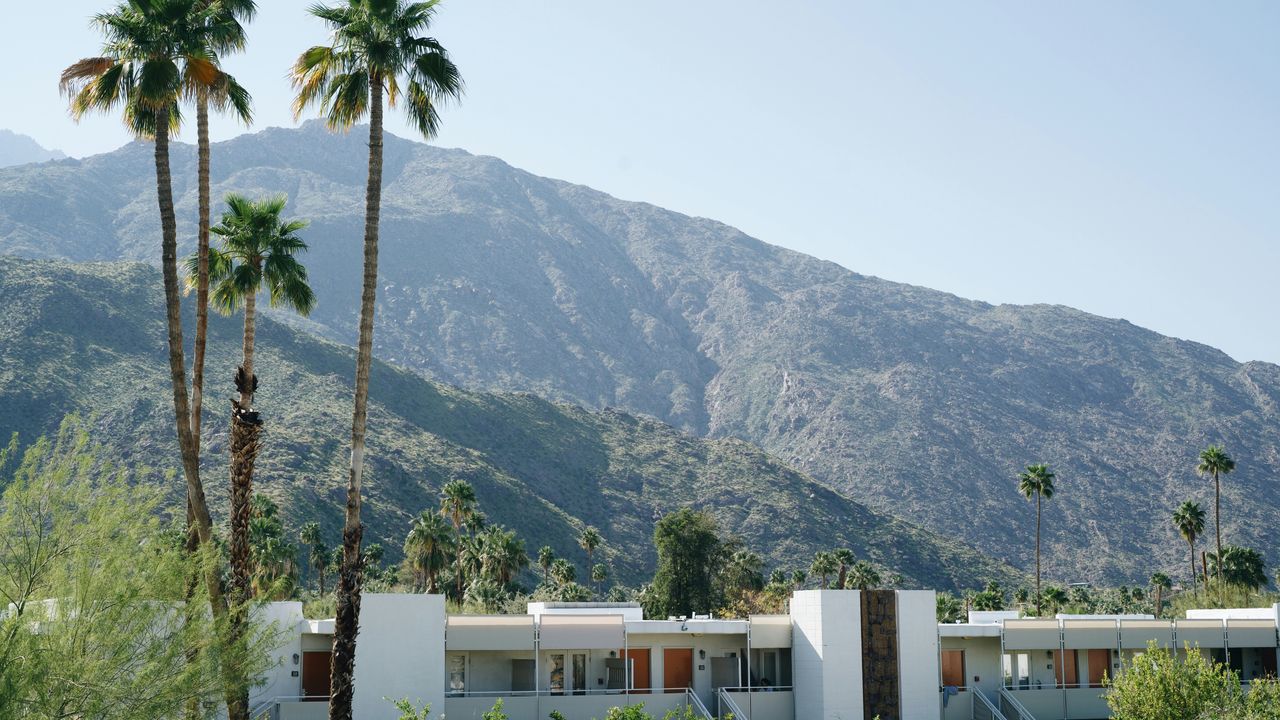

As the pool hoist lowered me into the water, I watched bubbles rise from thousands of feet underground. These thermal baths—stewarded by the Agua Caliente Band of Cahuilla Indians for millennia and long regarded as portals to the spiritual underworld and places of healing—welcomed my paralyzed body. I floated weightless as the San Jacinto Mountains turned pink in the evening desert light, feeling both ancient and entirely new ways of being received.
I’d come to Palm Springs in search of wellness—an experience that too often eludes disabled travelers. Spas can be physically inaccessible, retreats off-limits by design, and practitioners untrained to see disabled bodies as deserving of restoration. Palm Springs, roughly 130 miles east of Los Angeles, sits in the Sonoran Desert and has long served as refuge: from Hollywood stars in the 1930s who fled studio contracts for hidden midcentury villas to LGBTQ+ people who found acceptance when few places offered it. Over a third of the city’s residents now identify as queer. The question was whether that welcome extended to disabled people too.
“For families like mine, travel has always meant planning around what might go wrong,” says Josh Heinz, a local father and community engagement manager for Visit Greater Palm Springs. “I wanted to flip that—to make sure people traveling to Palm Springs can plan around what might go right for once.” Last spring Heinz led an initiative that made Greater Palm Springs the first destination in Southern California, and only the fifth worldwide, to achieve Certified Autism Destination status. Hotels, restaurants, and attractions across the valley have completed specialized training to accommodate guests with sensory sensitivities—learning, for example, that a meltdown is not a tantrum, that fluorescent lighting can overwhelm, and that sometimes a quiet corner matters more than a view.
“One in 36 children in the US is now diagnosed with autism,” Heinz adds. “One in six people have sensory needs or sensitivities. Yet the majority of families report hesitating to travel because they can’t find safe options. We are so proud to have trained so many people across the region to make neurodiverse and disabled people feel welcome.”
One of the first hotels to join was the JW Marriott Desert Springs Resort & Spa. During my stay I visited the hotel spa and saw the effect of this training. When I transferred onto the treatment table in my ungainly way—the kind of maneuver that usually prompts hovering hands and nervous glances—no one blinked. The therapist worked warm stones along my broken spine without hesitation, adjusting her technique so I never felt like an exception. Later, at The Spa at Séc-he, built directly atop sacred hot mineral springs, I was wrapped in a robe that could double as a duvet and watched the mountains fade into violet dusk as bodies of all shapes and sizes relaxed around me. My wheelchair was barely noticed, pool hoists outnumbered sun loungers, and with physical and attitudinal barriers removed a deep calm settled over me. I barely moved for days.
Advised that no trip would be complete without a drag brunch, I headed to the Saguaro Hotel on my final morning. Its rainbow-hued facade is one of the Coachella Valley’s most Instagrammed sights. “A drag brunch is a rite of passage, honey,” drawled Kiki Masters, dazzling in a red sequin dress. My avocado toast arrived as a queen executed a split inches from my table and the room erupted. What caught me more than the lip-syncing was the family across the room: two adult sons, a poised mother, a father in polos, and a girlfriend who looked ready for a pageant. “I want my boys to be exposed to different types of people and communities,” the mother said without hesitation. The show was deliberately family-friendly—designed to entertain and educate. “To see yourself reflected in a place, to move through it without apology or explanation, that’s restorative in ways no spa menu can capture,” the brunch host told me. “The LGBTQ+ community, the neurodivergent traveler, the wheelchair user—we are not exceptions to be accommodated. We are the point.”
Before leaving, I visited the Agua Caliente Cultural Museum and learned that the Cahuilla people do not say goodbye but instead bid visitors ‘Áčaqun ehíčine’—“go in a good way.” The phrase felt like a blessing and a perfect parting sentiment for a city built on the idea that everyone deserves refuge, and that wellness, in its truest sense, can mean being allowed to exist exactly as you are. Go well. After three days in Palm Springs, I could.
Where to stay
– Hampton Inn & Suites Palm Desert offers unfussy comfort in a central location near downtown restaurants and galleries.
– JW Marriott Desert Springs Resort & Spa spreads across 45 acres with multiple pools, lazy rivers, and golf courses.
– Renaissance Esmeralda Resort & Spa in Indian Wells delivers a more intimate experience with access to world-class tennis and the Indian Wells Tennis Garden.
– The Ritz-Carlton in Rancho Mirage sits at the quieter end of the valley with sweeping San Jacinto views.
All four hotels offer ADA-compliant rooms and facilities and are Certified Autism Centers.
Where to eat and drink
– Farm: a farm-to-table standout sourcing from local growers and serving California cuisine without pretension.
– The Front Porch: captures neighborhood-favorite energy with approachable dishes.
– Tac/Quila: Mexican food done right, with excellent cocktails and ceviches that showcase the desert’s surprising seafood offerings.
All three restaurants are fully wheelchair accessible with accessible parking and restrooms.
What to do
– The Living Desert Zoo and Gardens: 50 acres that showcase regional biodiversity.
– Rancho Mirage Library & Observatory: an architectural gem and cultural hub with night-sky programming for astronomy enthusiasts.
– Children’s Discovery Museum of the Desert: hands-on rotating exhibitions for toddlers through adults.
– Palm Springs Aerial Tramway: sweeping valley and mountain views from the tram.
– Riverside County Fair & National Date Festival: three weeks of agricultural celebration, live music, and community entertainment.
All listed attractions are wheelchair accessible and ADA compliant. The Tramway, Living Desert, Library & Observatory, and Children’s Discovery Museum are Certified Autism Centers.
In Palm Springs I found wellness that included me—where thermal springs, trained staff, accessible hotels and attractions, and a culture of welcome combine to create a rare kind of rest. The city’s commitment to accessibility and inclusion means more people can travel without planning only for what might go wrong. Áčaqun ehíčine—go in a good way.