





Spanish director Óliver Laxe first imagined Sirāt in 2011: a film of trucks racing across sand and a story unfolding in the desert. Living in Morocco at the time, he felt a profound connection to the landscape and decided to set the film there. The finished Sirāt—now an Oscar nominee for Best International Feature—follows a father (Sergi López) who searches for his missing daughter at a remote rave, accompanied by his young son (Bruno Núñez Arjona) and their dog. They join a convoy of ravers and cross into the Sahara, where surreal, tragic events play out.
Principal photography took place from May through July 2024 in both Spain and Morocco, in an unusually hot season. Laxe says he embraces difficulty in service of art: beauty often demands pushing limits, like climbing the highest branches to reach the best fruit. Because he lived in Morocco for more than a decade, he knew the languages and landscapes well and personally scouted many locations, combining on-the-ground reconnaissance with Google Maps.
The film alternates between two contrasting Moroccan spaces: the Atlas Mountains to the north and the Sahara to the south. For Laxe, the mountains induce a recognition of smallness that leads to surrender, while the desert offers abstraction and a space for transcendence. Those opposing moods are central to Sirāt’s visual and emotional palette.
Key filming locations
– Rambla de Barrachina, Spain: Because the film was supported in part by European public funds, about three weeks of shooting took place in Spain. The opening rave sequence—staged amid a red landscape flanked by two symmetrical hills—was filmed at Rambla de Barrachina in northwestern Spain. Laxe chose it because organizing a large, real rave in Morocco would have been far more difficult.
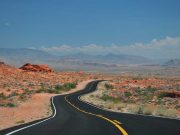
– Tagounsta road, Atlas Mountains (near Errachidia): The mountaintop road sequence was shot on the Tagounsta road, a route built by the French Legion in the 1920s during campaigns in the region. Laxe selected Tagounsta because it offered dramatic high-country scenery while remaining wide enough for the production’s vehicles and trucks.
– Haroun desert, near Erfoud: The film’s final desert sequence was shot in the Haroun desert, close to tourist hubs but off the beaten path. Laxe was drawn to its remarkably white, almost salt-like sand, which reads as abstract and visually striking on camera.
– Gara Medouar: The train that appears at the end of the film was real and was rented for the shoot. The train sits in Gara Medouar, a dramatic site that has been used in other high-profile shoots such as Spectre.
Production notes and challenges
Filming in remote terrain posed logistical challenges but also benefited from the experience of Moroccan production crews, whom Laxe praises as experts. For the mountain sequences the team established a camp on the Tagounsta road and lived in tents. The scenes involving raves and trucks carried real risks—pushing performers and vehicles to their limits—but Laxe describes Sirāt as one of his easier shoots despite those moments.
On location and responsibility
Laxe sees making a film in a place as an act of exchange rather than an invitation to mass tourism. He urges visitors to be travelers, not consumers looking for Instagram shots: travelers should spend time with local people, arrive without fixed comparisons to home, give back, and allow time for true curiosity. He explains that arriving in Morocco felt like returning to a remembered body: growing up in a peasant family in Galicia, he recognized continuity with people rooted in the land.
Personal background
Laxe lived in Morocco for 12 years before moving back to Galicia, where he restored his grandmother’s house in a valley that is part of a UNESCO Biosphere Reserve. He says he has never filmed in cities—the landscapes themselves are essential to his work, and Morocco’s deserts and mountains provided the spiritual and adventurous terrain he wanted for Sirāt.
Would the film draw visitors to these sites? Laxe is ambivalent. Many of the locations remain remote and lightly traveled, and he made the movie as an escape from tourism rather than an enticement to it. He distinguishes between tourists—who measure everything against home—and travelers—who arrive with radical curiosity and a willingness to give back.